
'Only 20 per cent of families in India buy cheese twice once a year.'

With crude palm oil prices on the rise, companies have started to jack up rates of soaps and edible oils in order to pass on the hike to consumers. Crude palm oil, one of the main ingredients in the manufacture of some consumer goods, saw a price rise of 45.2 per cent in the last three months. One of the country's largest consumer companies, Hindustan Unilever, said it has already started to take price increases in the skin cleansing category.

While there was a 6 to 7 per cent increase in volume compared to last year in the first few days of the month which coincided with festivals, a large part of the demand is yet to hit the market.

'We used to get 400-500 applications for Canada on a yearly basis until last year, but this has gone down to just 70 this year.'

Analysts are expecting pharmaceutical companies to post sales growth of 10-11 per cent in the second quarter this financial year while the Ebitda (earnings before interest, tax, depreciation, and amortisation) margins are anticipated to improve by about 110 basis points. Ebitda improvement will be led by lower input costs because prices of active pharmaceutical ingredients (APIs) are 5-15 per cent lower year-on-year (Y-o-Y). Axis Capital said sales growth would be around 10 per cent, of which growth in the India market would be 11 per cent or so.

'The customer is fast changing, and she demands newer experiences that wealth can buy.'

'For us, it's "keep moving and keep building a critical mass", which is commensurate with the size of the country.'
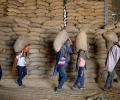
Truck movements across the India-Bangladesh border are on the rise, with increasing rentals signalling a trade recovery between the two South Asian nations. Yet, geopolitical tension looms large, with Bangladesh now under an interim government for nearly two months.

'All competitors are sourcing within the country, so we'll be at the same level of competition.'

Will it be Noel Tata, Ratan Tata's half brother?

Rise in raids on illicit drug manufacturing units, alongside arrests for the production, sale, or distribution of spurious or adulterated drugs.

Indian pharmaceutical companies are stepping up their efforts to combat the problem of counterfeit drugs, employing a variety of strategies, from packaging innovations to engaging private investigation agencies. The stakes are high, as counterfeit medicines not only harm consumers but also tarnish the reputation of leading brands.

India's second-largest passenger vehicles firm will be valued at Rs 1.59 trillion at the top-end of the price band of Rs 1,865-Rs 1,960.

'In India, managers and the leadership almost glorify overworking.'

With November 22, 23 and 24 being among the most auspicious dates for marriage this year, hotels across the country are all booked, as are wedding-related ancillary services.

The company has the largest car park in EVs in India, estimated to be around 170,000 units. As a pilot, it has already started work with used online car marketplace Spinny.

Quick commerce (Qcom) platforms are bringing upon a rapid change in the behaviours of online shoppers, with 31 per cent of buyers relying on the fast delivery option for grocery needs, according to a new study.
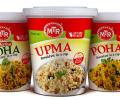
The Indian arm of the Norwegian investment company Orkla ASA, which owns spice brands like MTR and Eastern, is exploring the possibility of launching an initial public offering (IPO) in 2025, said a top company executive. "The ASA board just cleared the proposal. "We had done a pre-IPO study last year to understand what we need to do and based on that the board said, 'okay, let's go ahead and explore capital markets'," Sanjay Sharma, CEO, Orkla India, told Business Standard.

This is not the first EV that Mercedes would be making in India though. It has been making the EQS sedan here for the last 18 months, and has sold 500 units of the car.

French wine and spirits maker Pernod Ricard expects to report low double-digit growth in India in the medium-term on the back of a strong premiumisation trend emerging in the country. "We are now the second market worldwide for Pernod Ricard and India continues to be a big growth engine for the group. "Our compoun annual growth rate (CAGR) over the past five years was 8 per cent, which is robust and was maintained at a rather high level," said Jean Touboul (pictured), chief executive officer, Pernod Ricard India.
 © 2025 Rediff.com - Investor Information - Advertise with us - Disclaimer - Privacy Policy - Sitemap - Feedback - About us - Terms of use - Grievances